|
Dear Friends and Neighbors, As your state representative, I am proud to share the work we have been doing together to move Michigan forward. From the Capitol to our local communities, I have been focused on delivering real results from protecting our environment, investing in our schools and standing up for working families. In this newsletter, you will find updates on key legislation, local initiatives and ways you can stay involved:
Wayne Disposal Radioactive Waste Update
|
|
|
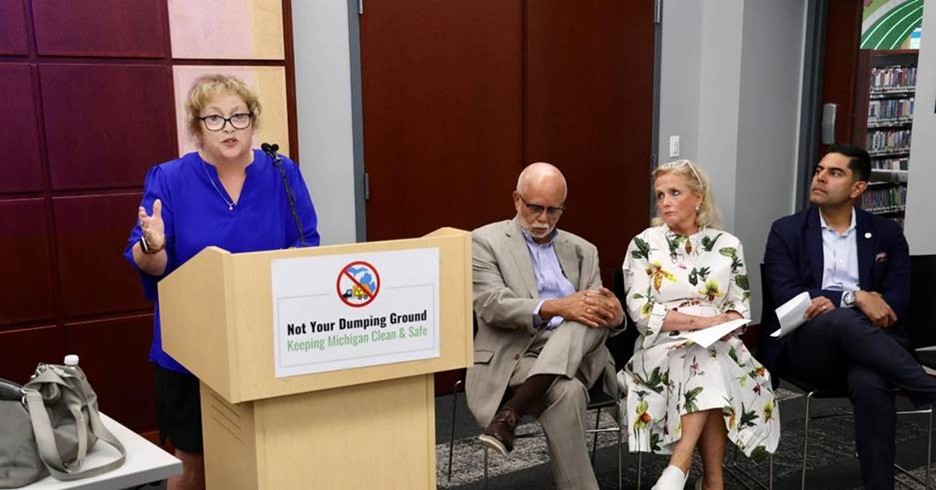
On Aug. 5, Judge Kevin Cox of the Third Judicial Circuit Court of Michigan granted a preliminary injunction against Wayne Disposal and Republic Services Inc. to block them from accepting dangerous Manhattan Project-era waste from FUSRAP sites in Ohio, Iowa, New Jersey, New York and Missouri, regardless of when they were scheduled or contracted. Judge Cox reviewed the case based on the likelihood of success on the merits, potential to cause irreparable harm, potential risks, comparative harm between the parties and potential harm to public interest. He found that all of these factors “weigh in favor of Wayne County and the plaintiffs” and issued the injunction. In late July, we received word that the U.S. Army Corps of Engineers had changed course and was sending the Niagara Falls radioactive waste from the Manhattan Project to a facility in Texas instead of to Wayne Disposal. A link to more information and my full statement about Judge Cox’s ruling can be read here. On Aug. 13, the Michigan Department of Environment, Great Lakes and Energy (EGLE) announced its intention to issue an operating permit and expansion to the Wayne Disposal Incorporated (WDI) hazardous waste facility in Van Buren Township. Once again, this “public notice” was buried in the back pages of the Belleville Area Independent newspaper. That’s not public engagement, that’s hiding critical information in plain sight, not even affording our community the right to easily access information about public health concerns right in our own backyards. This decision comes despite overwhelming opposition from residents, environmental experts and local leaders. After EGLE’s announcement, I held a press conference with other elected officials to urge EGLE to expand the public comment period and to call for an immediate halt to the Wayne Disposal expansion until serious environmental concerns are thoroughly evaluated and all community questions have been answered. I have also urged greater transparency in how these permits are evaluated, including testing criteria and what is being tested for, and have advocated for creating a long-term plan to reduce Michigan’s reliance on hazardous waste landfills. The public comment period for the proposed hazardous waste operating license for WDI is currently open, and after my press conference, EGLE extended the public comment period for an additional 30 days, until Oct. 31, 2025. EGLE is seeking public input on the draft License and encourages the public to present written comments to [email protected], or by United States mail no later than Oct. 31, 2025. Letters can be addressed to: Christine Matlock EGLE, MMD — Hazardous Waste Section, P.O. Box 30241, Lansing, MI 48909-7741 Let me be clear: This expansion is not in the best interest of our community, public health or Michigan’s future. The people of the surrounding communities have spoken loudly and clearly that they don’t want WDI accepting even more of this hazardous waste. WDI is already one of the largest hazardous waste landfills in our country, accepting and handling toxic industrial byproducts and radioactive materials from all over the country. These are dangerous substances that can contaminate air, soil and groundwater. The risks to families who live, work and play here will only grow because of strong storms that can bring heavy rains and potential flooding. Radioactive waste has no business coming through our neighborhoods without local input or consent. Wayne County families deserve to know their health and safety will never be put up for negotiation. This facility sits next to Belleville Lake, with multiple waterways connected to the Huron River watershed. It is steps away from schools, baseball fields, parks and senior living facilities. This is not a safe location for toxic waste. It is a recipe for disaster. Michigan holds 20% of the world’s fresh water, so allowing its contamination is not just bad policy, but it is reckless and a betrayal of our duty to protect not only our residents, but also the Great Lakes. My bill, House Bill 4393, creates a comprehensive plan to modernize Michigan’s hazardous waste management system. It addresses public health, environmental, community and stakeholder concerns over the disposal of hazardous materials in densely populated communities. If enacted, this legislation would establish clear and enforceable guidelines that protect our residents and environment. It’s tough, it’s smart and it holds corporations accountable. State Senator Darrin Camilleri has introduced the Senate version of this bill, SB 246. Although Camilleri’s bill has passed in the Senate, the reality is that it will be a challenge to get this passed in the House. The legislation includes several landmark provisions, including:
The health and safety of my community is my number one priority, and right now, that is at risk due to the amount of waste being taken in by our state’s landfills. I have long fought against this landfill, dating back to my time as a Van Buren Township Trustee, where I’ve voted against past landfill expansions, and I will not let up until our laws are adequately updated. It is far past time that we do right by our communities and pass this legislation to protect the people we serve. You have made your voices loud and clear — Michigan is not a dumping ground! Let me be clear: any waste management proposal needs to address the necessity of long-term radioactive waste regulation that my residents have consistently asked me to address. I will absolutely work with anyone, regardless of political party, who is serious about addressing this issue. However, any proposal that only raises tipping fees without addressing the long-term concerns of our residents misses the mark completely.
Presented Tribute for Farmer’s Retirement in Milan
|
|
|
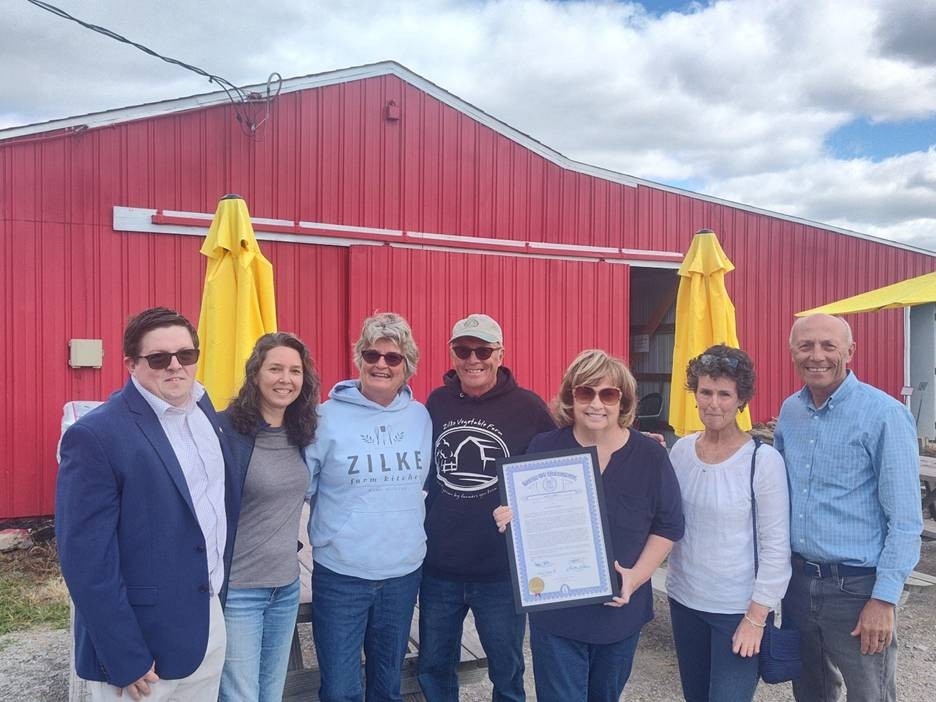
In August, I was honored to present a tribute to Tom and Vicki Zilke to commemorate their retirement and acknowledge all of the contributions they have brought to Milan over the past 14 years. In 2011, the Zilkes opened the Zilke Vegetable Farm stand in a roadside farm stand that had sat idle for several years in Milan. The opening of this farm stand was fueled by the Zilkes’ passion for healthy food and a desire to provide for their community. It featured both produce from their own farm as well as from other local farmers, and it also offered products from other local businesses. The Zilke Vegetable Farm stand used a community-supported agriculture model, allowing people to buy produce in advance, which helped to pay for seeds, labor and land. In 2018, Vicki opened the Zilke Farm Kitchen to answer the persistent question of “what’s for dinner?,” turning the farm’s fresh produce into healthy quick-to-prepare meal kits. The Zilkes also partnered with Milan Seniors for Healthy Living to provide nourishing daily meals for senior lunch menus. This couple’s passion for healthy food and desire to foster community ties turned the Zilke Vegetable Farm into a trusted source for local produce in Milan for 14 years and made the Zilke Farm Kitchen an invaluable community resource, especially during the years of the pandemic. We all appreciate Tom and Vicki’s expertise and their dedication to providing health and service through all these years. Happy retirement!
Attended the Grand Reopening of Mary Ann Banks Memorial Park in Romulus
|
|
|
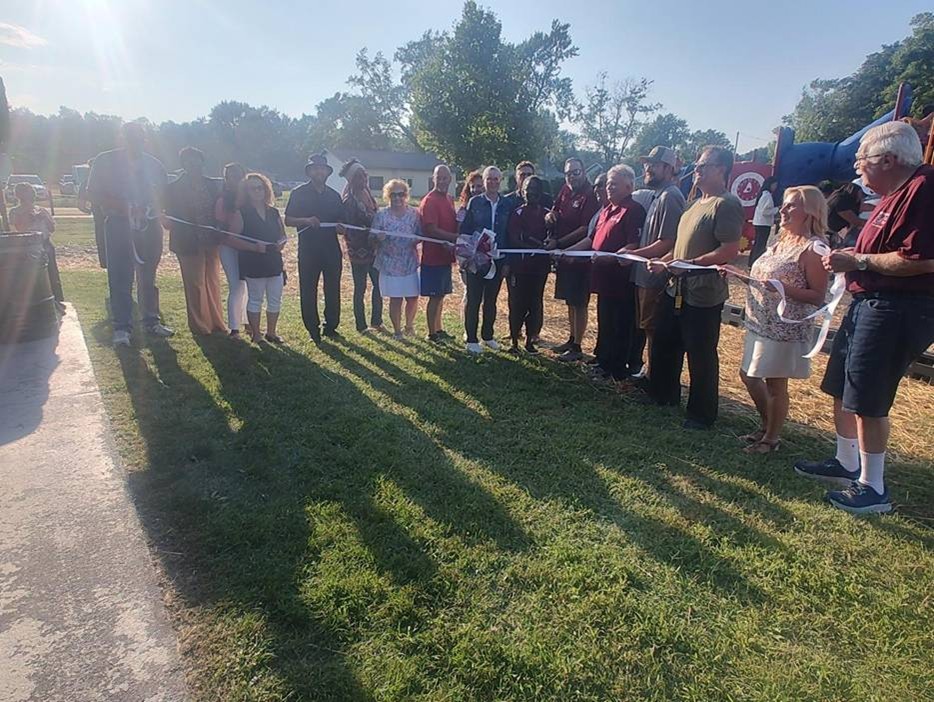
In August, I joined the people of Romulus for a celebration and ribbon cutting ceremony to mark the grand reopening of Mary Ann Banks Memorial Park. Improvements to the park include an ADA (Americans with Disabilities Act) accessible park with a paved sidewalk connecting the restroom facility to the pavilion, a new all ability whirl spinner and a resurfaced ice rink. The project was part of the Michigan Department of Natural Resources’ Recreation Passport grants program. This fun event was packed with residents enjoying a hotdog cookout from the Romulus Rotary Club, pizza and slushies from Bubbie’s Pizza, face painting from Colorful Events and a martial arts demonstration from Greca Martial Arts Academy Romulus. I had a great time, and I know the community did too!
Our State Department and Education BudgetsIn late August, House Republicans passed a general omnibus budget that removes funding for many critical services in Michigan across multiple state departments. My Democratic colleagues and I first saw this 800+ page bill less than an hour before being expected to vote on it. Obviously, given this short window of time to review, there was no time for transparency, debate or public input. This rushed effort to pass the House version of the state budget minimized public awareness or scrutiny. The Republican budget bills move dedicated funding away from school meals. Some of the other items in these bills include cuts to senior services, Medicaid, hospital and health care provider funding, public health services, community violence intervention grants, youth vision and hearing screenings, and even funding for sexual assault testing kits. The bill allocates millions for a community pool and horse racing programs, even though Michigan hasn’t had a horse racing track since 2024. There is much more in this bill, and you can read the non-partisan House Fiscal Agency analysis summary of what is in the general omnibus budget by clicking here. Michigan is already facing a $677 million budget hole starting in October as a result of the federal “One Big Beautiful Bill Act” that was signed into law in July. I voted no on the House Republican budget proposal because Michigan deserves a budget that puts our communities first by funding our families, schools, health care facilities and the community organizations that provide invaluable services to our state. I will continue fighting for a state budget that puts people first! The Republican general budget bill has not been approved by the Senate or the Governor, so budget negotiations will continue. Michigan school districts, teachers and students count on lawmakers to pass the final state budget by July 1. Unfortunately, this year’s budget process is moving extremely slowly, and the Republican-led House failed to reach a budget agreement with the Senate on time. As of the middle of September, we still do not have a final state budget agreement. In June, my Democratic colleagues and I proposed the House Dems’ Education Vision budget plan to fully fund our schools and support the programs students and parents rely on most. Our plan invests $3.2 billion more into Michigan schools than the FY 2025 budget, and is informed by conversations we’ve had with parents, teachers and community leaders across our districts. House Democrats’ Education Vision budget plan would ensure an equitable and quality education for every child. In our budget, we prioritized dedicated funding for:
Unfortunately, our plan was voted down and instead the Republicans voted in favor of their own plan, HB 4577, that moves dedicated funding away from specific programs. Their plan moves funding away from the universal school breakfast and lunch program that we fought for to ensure no child sits down to learn on an empty stomach. This is what these school meal funding changes will look like in our district:
More than 41% of Michigan households are either living below the federal poverty level or are identified as ALICE – Asset Limited, Income Constrained, Employed. This means that while the heads of household may earn an income, it is only enough to keep them above the poverty level, meaning many do not qualify for some state and federal benefits, yet their income is low enough that one financial emergency — a flat tire, an unexpected doctor’s bill — could completely derail them. Of those 41%, more than half are households with children. Parents are already struggling with the high cost of groceries, and some of the increases are due to tariffs. Why would we further burden these families now? Removing universal meal funding affects students’ nutrition and learning. Rolling free meals into the foundation allowance for schools means that districts could drop meal programs, harming kids who rely on these meals. This program is the primary source of nutrition for countless vulnerable children in our communities. It is a lifeline for students in rural and urban districts alike. The Republican plan changes eligibility for school safety and mental health funding, which could hurt schools’ ability to update infrastructure and keep kids healthy. In our district, this means funding could be moved away from mental health and school safety investments:
The Republican plan does not include dedicated funding for Career and Technical Education (CTE) funding. CTE is a core initiative that dramatically improves young people’s chances of finding and keeping stable, well-paying jobs, and it provides students from all backgrounds with the academic rigor, technical proficiency and essential soft skills they need to succeed. It helps ensure that a student’s socioeconomic background isn’t a barrier to accessing a quality education or securing a stable, fulfilling career. CTE is a powerful antidote to systemic inequality and provides opportunity for more than 112,000 students across Michigan. For our district, Republicans moved funding away from CTE programs and incentives by the following amounts:
The Republican budget eliminates dedicated funding for Michigan’s FIRST Robotics Program. This program teaches kids to design, program and prototype robots. Some of you may be familiar with this program, as this March, the state district competition for 2025 was held at Belleville High School. There were 40 teams from across the state, including our hometown Belleville High School. In April, the BHS team took first place at the Detroit FIRST Robotics Competition and won the Engineering Inspiration Award. The elimination of this funding means fewer opportunities for our students to learn valuable skills in a fun and collaborative environment. The Republican proposed budget plan threatens dedicated funding for:
Moving away dedicated categorical funding will put pressure on districts to re-prioritize essential services unless they cut classroom programs. I’m concerned that these cuts target support for vulnerable students and will disproportionately harm small and rural districts. This funding would all be rolled into a single line item but would only be accessible if districts meet new requirements, like pledging to employ both a school resource officer and a mental health professional, as well as providing an annual report to the department detailing how the funds were spent. While I absolutely support school safety, the reality is that these types of conditions simply aren’t feasible for many districts, and they add uncertainty to already tight planning timelines. I’m concerned that we simply don’t have the staffing capacity in this state to achieve such a goal, and requiring these districts to comply with these requirements without dedicated funding amounts to imaginary funding for imaginary staffing. I am also concerned that shifting targeted support to block grants will make already underfunded districts choose between core programs and student well-being, which may mean more unnecessary paperwork and rules that they have to adhere to for fewer student success outcomes. While many school districts are trying to stretch every dollar to support our students, this proposed budget diverts more than $1 billion from the School Aid Fund to higher education. That’s critical funding cuts needed to:
Their plan moves $10 million away from the MI Future Educator Fellowship Program as well, which aims to offset the costs of obtaining teacher certification for college students with at least a 3.0 grade point average. The bill’s sponsors and supporters are saying it’s a $12,000 per-pupil block grant, but this is not accurate. Their budget includes a 20% funding penalty on funding that would be withheld from schools if a district does not adhere to specific new rules. If compliance is not met by the end of the fiscal year, the funds are held in escrow specifically for that school district. In addition to these K-12 changes, House Republicans passed HB 4576, which eliminates $5.6 million in federal Institute of Museum and Library Services (IMLS) library technology funding with no state replacement, even as libraries remain key community hubs. The IMLS is an independent federal agency created by Congress that supports libraries, archives and museums. On March 14, 2025, a federal executive order called for funding cuts to the IMLS. HB 4576 cuts the federal funding that was previously provided, which could put our local libraries into a state of uncertainty about their future. Losing library tech funding could mean fewer digital access points for students, job seekers and seniors. Multiple libraries in our district have posted about how these funding cuts could affect their operations. Losing these critical services could have a devastating effect on our communities, including for young Michiganders’ progress with reading comprehension and literacy. Community college (HB 4579) and university (HB 4580) operating funding has been reduced in the Republican education budget. This will create instability for some of Michigan’s universities, as some students could see higher tuition costs and universities could face staffing cuts. The House-passed budget also withholds the state’s full share of Michigan Public School Employees Retirement System Unfunded Actuarial Accrued Liability payments, meaning the following community colleges will see an overall effective rate reduction in funding:
Between Washington pulling back on Title I and school meals, and House Republicans removing categorical funding from universal meals and major initiatives of our universities, we have much work ahead of us to demand long-term, bipartisan responses, not quick fixes that do more harm than good. I cannot support an extreme budget that disinvests in education and that moves money away from our classrooms while our communities are already being asked to do more with less. Negotiating the budget for the state is one of the most important responsibilities of the Legislature that is outlined in the Michigan Constitution. Without a budget passed by the July 1 deadline, our schools are planning in the dark for their next fiscal year. I believe that this uncertainty about the funding our schools have for critical programs like universal free meals, special education or rural transportation is irresponsible and indefensible. Michigan kids deserve better. This budget process is far from over. I have your back, and I will continue fighting for the dollars our students need to succeed in and out of the classroom.
Massive Medicaid and Food Assistance Cuts Threaten Michigan Families
As costs continue to rise across the country, Michiganders are working harder than ever just to stay afloat. Instead of offering relief, the recently signed-into-law federal so-called “One Big Beautiful Bill Act” (OBBBA) will make things worse. This act includes the largest cuts to Medicaid and food assistance in American history, slashing $1 trillion from Medicaid and $186 billion from food assistance over the next 10 years. The nonpartisan House Fiscal Agency has estimated that the OBBBA will blow a $677 million hole in our state’s budget beginning this year. July 30 marked Medicaid’s 60th anniversary, so the timing of these cuts could not be more alarming. Medicaid has helped millions of children, seniors, veterans and working families live healthier, more dignified lives. Now, its future is at serious risk due to sweeping federal funding reductions. What does that mean for Michigan?
To make matters worse, the Republican-led House still hasn’t negotiated a final state budget and are leading one of the least productive legislatures in over 85 years. This isn’t normal, and with no clear plan from the Speaker, schools and health care providers are being forced to operate in the dark while families are left waiting for answers. I’m fighting to protect Michigan families from the damage being done in Washington and the dysfunction in Lansing. That means putting health care, food security and school funding first — not last. I am committed to being your voice in Lansing and continuing the fight for a healthier and safer Michigan. As always, please don’t hesitate to reach out with your thoughts, concerns or ideas. I am listening and I am here for you.
|
|
Sincerely, |
|
|
State Representative Reggie Miller |