
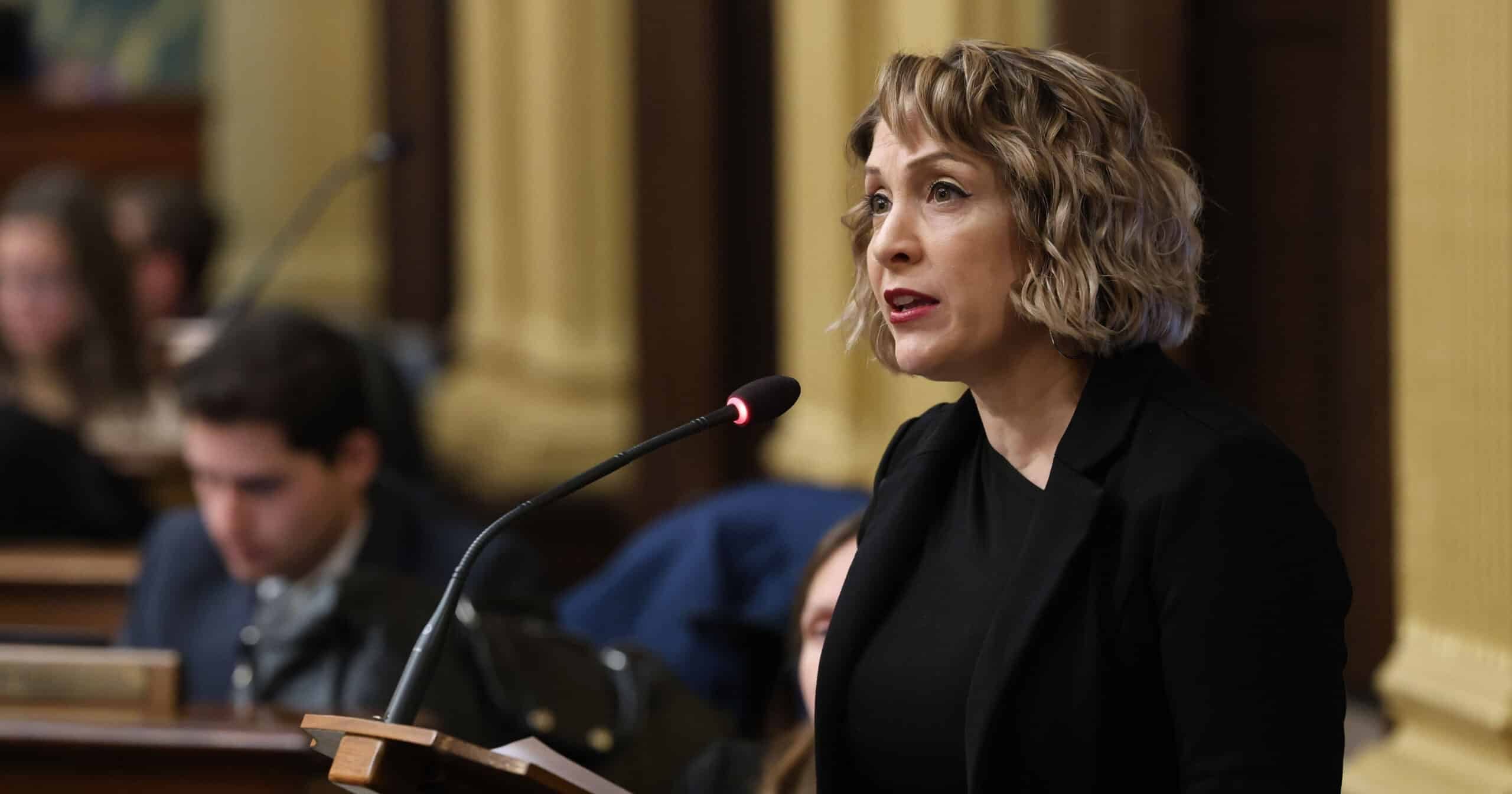
Dievendorf Introduces Four Bills to Strengthen Pathways Out of Homelessness, Support Survivors
LANSING, Mich., Jan. 13, 2026 — State Rep. Emily Dievendorf (D–Lansing) introduced four bills focused on removing barriers for survivors of violence and strengthening Michigan’s efforts to prevent and end homelessness. The legislation was developed in collaboration with the Michigan Coalition Against Homelessness and reflects a continued commitment to supporting unhoused neighbors and individuals fleeing dangerous situations.
Two of the bills would create and support a Homeless Advocacy Fund by establishing a voluntary checkoff on Michigan individual income tax returns. Contributions would be directed to the Michigan Coalition Against Homelessness, an inclusive statewide organization that works to improve systems and support communities to prevent and end homelessness in a way that leaves no one behind, while advancing housing justice and making ending homelessness a shared priority across the state.
“Homelessness is not an inevitability,” Dievendorf said. “It is something that we can fix with proper policies that are both common sense and empathetic to the position many Michiganders find themselves in. Homelessness is a societal issue, and it is going to require all of us working together to address it. These bills represent a major step in that direction. We are working to improve the way we take care of our homeless populations to make sure no one gets left behind.”
“Michiganders continue to face a housing crisis,” said Eric Hufnagel, CEO of the Michigan Coalition Against Homelessness. “Federal policies will have a devastating impact on the ability of families to maintain their housing. These funds will allow us to support the work being done in communities throughout the state.”
A third bill would waive fees for vital records for individuals who are fleeing or attempting to flee a dangerous situation involving domestic violence, dating violence, sexual assault, stalking or human trafficking. This legislation closes existing loopholes that previously prevented many survivors, particularly those fleeing intimate partner violence, from qualifying for fee waivers needed to obtain critical documentation.
“Survivors should not be blocked from safety or stability by paperwork fees or outdated definitions,” Dievendorf added. “These bills remove unnecessary barriers, center survivor safety and strengthen our collective responsibility. This is about supporting survivors, so they get the help they need.”
The fourth bill would waive fees for state identification cards for individuals fleeing or attempting to flee the same forms of violence, recognizing that access to identification is often essential for securing housing, employment, medical care and other vital services.
Together, the bills underscore the interconnected nature of survivor safety and access to documentation and housing stability, and advance policies designed to meet people where they are and support long-term stability.
###