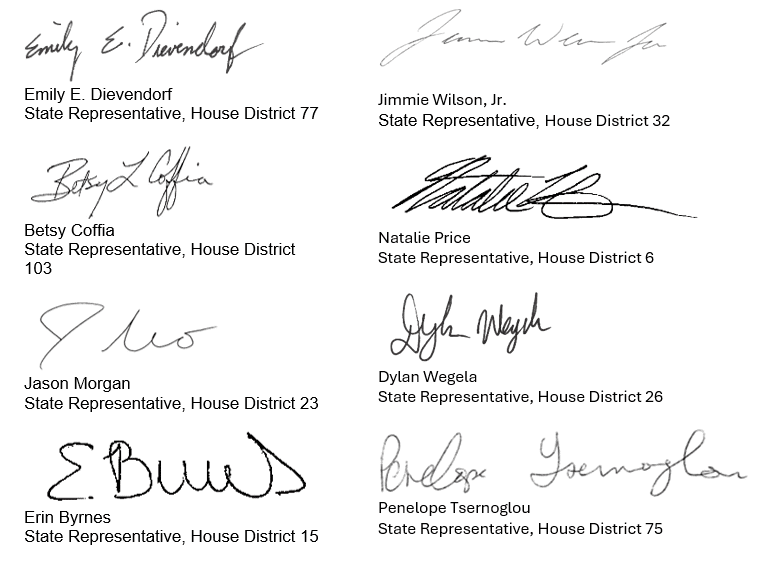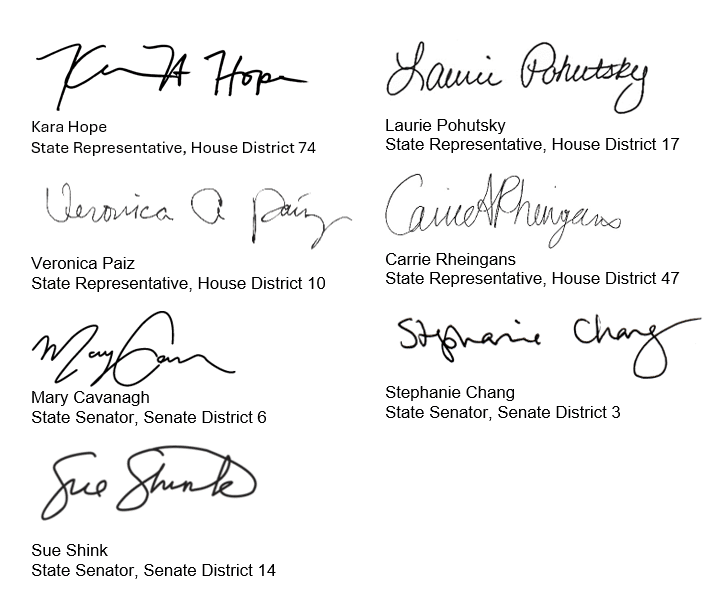
Dear Director Wieferich,
As members of the Michigan Legislature, we write to express our serious concerns regarding the Michigan Department of Transportation’s participation in the Master Maintenance Memorandum of Understanding (MOU) with the United States Border Patrol Detroit Sector and Homeland Security Investigations (HSI) that authorizes the placement, operation, and maintenance of law enforcement surveillance equipment within Michigan trunkline rights-of-way. We respectfully urge MDOT to exercise its authority under the agreement to terminate the MOU and discontinue any current or future agreements facilitating the deployment of automated surveillance technologies, including Flock Safety camera systems and similar automated license plate reader (ALPR) networks, on state transportation infrastructure.
The MOU explicitly permits federal agencies to install and operate law enforcement equipment on state trunkline rights-of-way while reserving MDOT’s right to terminate the agreement when it determines continued use is not in the public interest. At a time when communities across the nation are witnessing the expansion of federal surveillance and immigration enforcement activities, Michigan should carefully consider whether state-owned infrastructure should be used to facilitate systems capable of tracking the movements of millions of residents who are not suspected of any crime.
Reporting from the Associated Press shows that the Conveyance Monitoring and Predictive Recognition System (CMPRS) run by U.S. Customs and Border Protection (CBP) is a large license plate surveillance program that unknowingly affects all Michigan drivers. CBP shares tips and requests for traffic stops with local law enforcement officers. Ongoing litigation in other states indicates that this program results in serious constitutional violations, with innocent drivers subjected to unlawful search and seizure. Under this program, some ALPR installments in other states have also included TraffiCatch technology that gathers Bluetooth and Wi-Fi identifiers. This means that in addition to gathering license plates, these devices would also document mobile devices, such as phones, laptops, and even vehicle entertainment systems.
The American Civil Liberties Union and other civil liberty advocates like the Electronic Frontier Foundation have repeatedly raised constitutional concerns regarding expansive ALPR systems and mass-location surveillance technologies. While individual license plate observations may occur in public view, the aggregation, retention, and sharing of location data over time can create detailed records of individuals’ movements, associations, religious activities, political participation, healthcare visits, and other constitutionally protected activities. Such systems risk chilling First Amendment freedoms and raising significant Fourth Amendment concerns when government agencies can retrospectively reconstruct a person’s movements without individualized suspicion or judicial oversight.
These concerns are not theoretical. Across the country, civil liberties organizations and courts have increasingly questioned the use of dragnet surveillance technologies that collect information on vast numbers of innocent individuals. The ability of local, state, federal, and even out-of-state agencies to access shared databases raises important questions about transparency, accountability, data retention, error rates, and misuse. Michigan residents deserve clear assurances that their movements are not being cataloged and analyzed without meaningful safeguards.
We are also concerned about the real-world consequences of automated surveillance systems. Numerous reports have documented instances in which ALPR data, database errors, vehicle misidentification, and investigative overreliance on automated alerts have contributed to unnecessary traffic stops, mistaken detentions, and encounters between law enforcement and individuals who had committed no crime. When law enforcement action is initiated based primarily on automated surveillance data, the risk of unlawful stops, constitutional violations, and disproportionate impacts on communities of color increases substantially.
Michigan has long valued both public safety and individual liberty. These goals are not mutually exclusive. Effective law enforcement can and should be conducted using targeted, constitutionally sound investigative methods rather than expansive surveillance networks that collect data on the daily activities of law-abiding residents. The deployment of ALPR systems and similar technologies on state transportation infrastructure moves Michigan toward a model of mass surveillance that many constituents find inconsistent with our state’s commitment to privacy, civil rights, and transparent government.
Accordingly, we respectfully request that MDOT:
- Exercise its authority to terminate the Master Maintenance Memorandum of Understanding governing federal law enforcement surveillance equipment on state trunkline rights-of-way;
- Decline to enter into any future agreements authorizing the installation of ALPR cameras or similar automated surveillance systems on MDOT-controlled infrastructure;
- Conduct a comprehensive public review of any existing surveillance technology deployments on state transportation property;
- Provide transparency regarding data collection, retention, sharing practices, and agency access associated with any existing surveillance systems; and
- Work with legislators, civil rights organizations, local governments, and affected communities to develop privacy-protective standards before any future surveillance technologies are authorized on state-owned infrastructure.
The people of Michigan expect their government to protect both their safety and their constitutional rights. We believe ending MDOT’s participation in surveillance agreements that facilitate mass location tracking is a necessary step toward maintaining that balance.