
Lawmaker takes steps to improve pet rescue and rehabilitation in Michigan
|
|
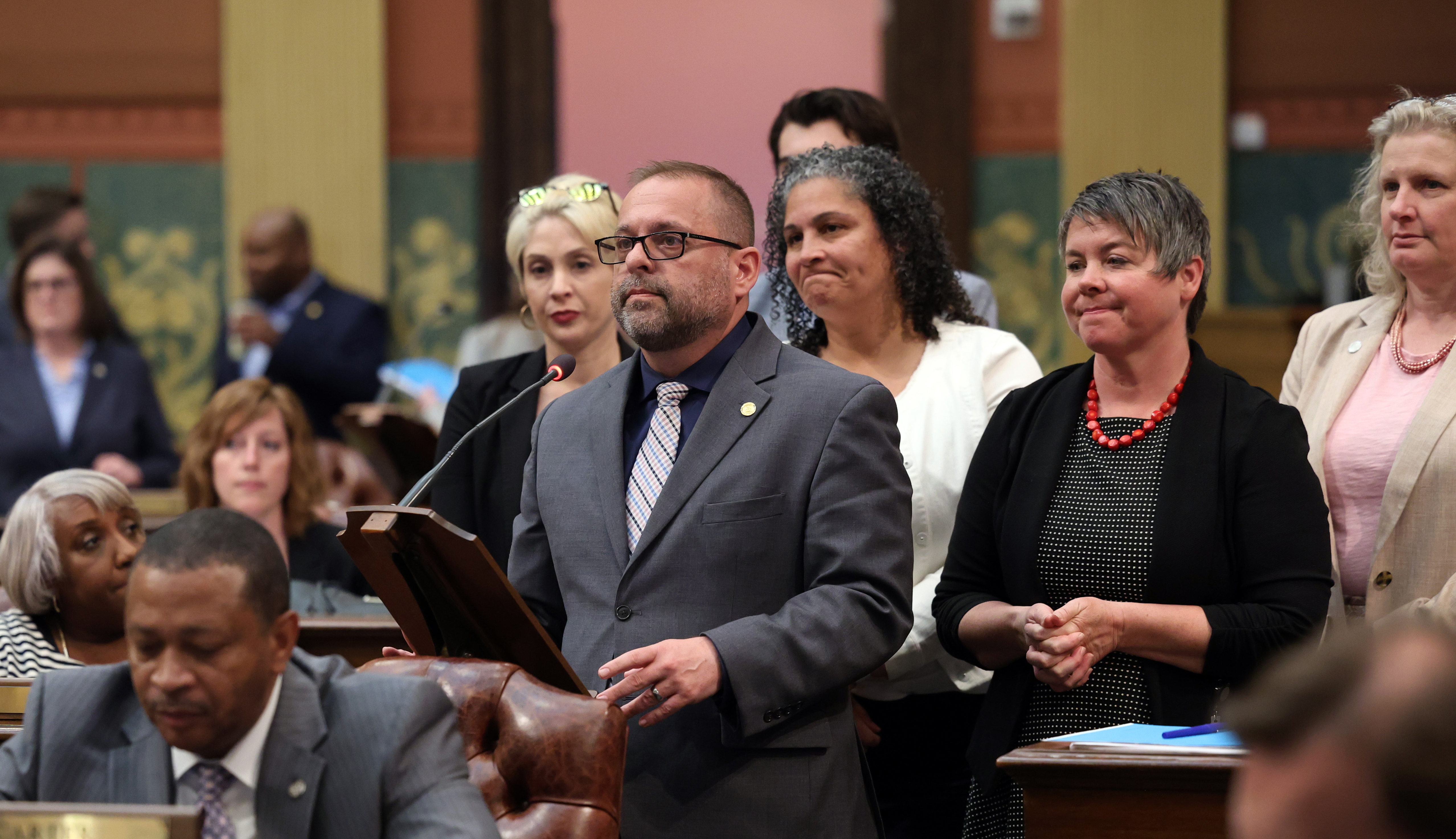
State Rep. Mike McFall (D-Hazel Park) speaks on the House floor at the Capitol building in Lansing. |
|
|
|
LANSING, Mich., Sept. 24, 2025 — Today, state Rep. Mike McFall (D-Hazel Park) introduced House Bill 5063. This bipartisan legislation would provide a state income tax credit for Michiganders who open their homes to foster animals. The bill, developed in collaboration with Michigan Humane, aims to support the vital role foster caregivers play in rescuing and rehabilitating animals across the state.
“For thousands of pets each year, foster caregivers are the bridge between life without a family and finding a forever home,” McFall said. “This bill recognizes the contributions of caregivers and provides meaningful support to help them continue this life-saving work.”
Beginning in the 2026 tax year, the legislation would provide a $50 credit per fostered animal for a minimum of seven days, with an additional $50 for every 30 additional days of fostering, for up to five animals per year. The credit would adjust annually for inflation and require verification from a qualifying 501(c)(3) organization or a municipal shelter.
Michigan Humane, a statewide leader in animal welfare that has long supported families and their pets through fostering programs, praised the legislation. To highlight the importance of this work, they shared a story from Gaylon Lance, a client who needed help caring for his two cats, Lydia and Diamond, while temporarily unhoused.
“Without the Michigan Humane Safety Net program, I would have had to give up my cats or keep them in my car during the August heat. Thanks to this program, Lydia and Diamond were cared for and kept together. They’re just like my kids — they mean everything. I’m so lucky to have them and don’t know what I’d do without them; they give me purpose,” Lance said.
Michigan Humane’s “Safety Net Foster Programs” help pet owners experiencing medical emergencies, domestic violence or housing instability retain their pets during crisis. These foster stays typically last 30-90 days, with homes needed urgently and often with little notice. In the first half of 2025 alone, Michigan Humane provided Safety Net fostering to 42 animals from 21 families, while receiving 441 inquiries about the service — demonstrating overwhelming demand and a shortage of available foster homes.
“Safety net foster programs are a lifeline for families going through tough times,” McFall continued. “A tax credit would help recognize the huge difference volunteers make for animals and the families who love them.”
### |